
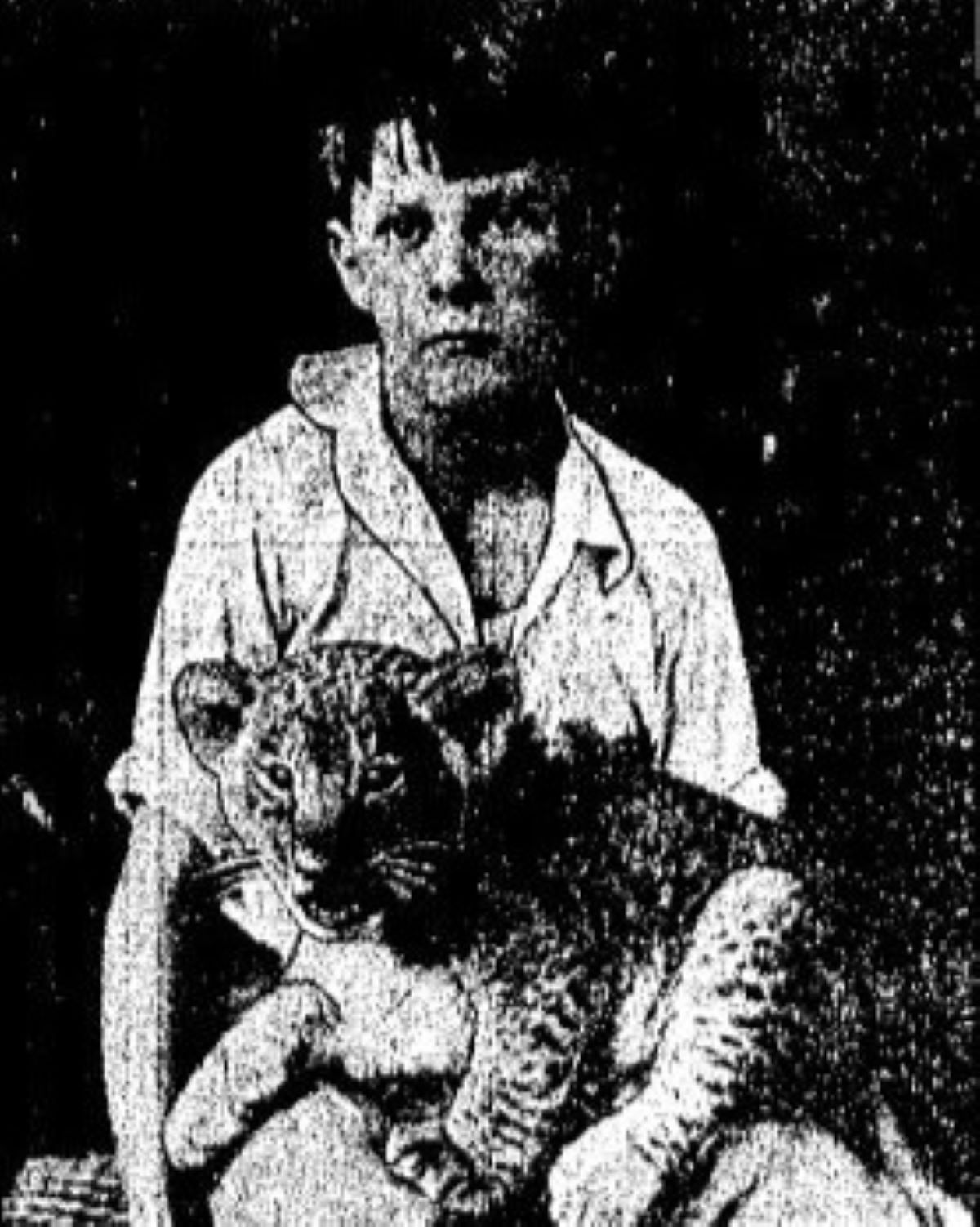
“King’s lions are out! The lions are loose!” came the cry that evening in Homer, and everyone who heard was immediately on their guard. It was March of 1931, and only four years since E.L. and Grace King returned from their most recent African hunting trip with three living-and-breathing lion cubs. And while the lions’ stone-and-steel enclosure at Rockledge, the Kings’ home, certainly appeared sturdy, it was fair to suspect that wild animals could never be truly caged. Wasn’t it only a matter of time before one of the beastly Rockledge lions escaped to wreak havoc upon the unsuspecting Homer citizens?
A Private Pride
During their 1926-27 big game excursion to Eastern Africa, the Kings hunted in the Ngorongoro Crater (located in what is now Tanzania), and collected animals and stories. This was the first time, though, that they’d brought back a live lion as well. The intent, according to a 1927 Winona Republican-Herald column, was to raise the cubs at the family’s summer estate in Homer “until they [became] too unruly to handle,” after which the lions would be surrendered to a zoo or other sanctuary.
All seemed to go well for years. The cubs were raised in a specially equipped stone barn at Rockledge, looked after by Homer native Lewis E. Fay, who had experience caring for circus animals. Fay kept up correspondence with other big cat handlers and by all accounts did an excellent job; one of his more famous correspondents was Charles Gay of Gay’s Lion Farm, a tourist attraction in El Monte, California.
With such success, the Kings decided to increase their private pride. They brought in a female lion, Victoria, from Longfellow Gardens in Minneapolis to mate the two remaining males Nungo and Narengetti. Victoria had three litters, all born on the estate. The second litter included a cub named Kali, who attacked Fay’s son Bud one morning as he assisted his father with the menagerie duties. (Picture from Winona Daily News article.)
Lions on the Move
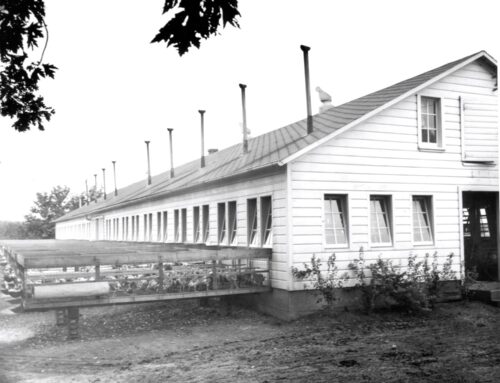
While Bud did commit the sin of wearing a red plaid jacket known to be loathed by the lions—and thankfully he lived to tell about it!—the Kings presumably decided this was proof enough of unruliness. They donated all nine lions to the Chicago Zoological Park near Riverside, today known as Brookfield Zoo Chicago. The stone enclosure was refigured to house the Kings’ daughter Mariel’s prize-winning Pekingese pups; still reminiscent of lions with their long mane-like coats, perhaps, but greatly and safely downsized.
Winona Lions Today
Today it’s illegal to purchase certain exotic animals in the state of Minnesota, including lions. While there may be other imported creatures afoot in Winona County, the only African lions you will see here are the statues at the Winona Savings Bank (now WNB Financial), a building commissioned by the Kings in 1913, and which still houses some of their mounted safari animals. But while you won’t find live lions, you will find other local living-and-breathing examples of the beast who so terrorized the streets of Homer that March night back in 1931: it was only a bull, escaped from the holding area at the Interstate Packing company.
Presumably the bull was eventually recovered, and the child who cried lion suitably chastised. It was one of those rare cases you find sometimes in historical research, when someone was telling a load of bull and yet, not lyin’.

Hi…..Grace and E.L. King were my grandparents and I have a slightly different version of this story. I’d enjoy talking with you, so please contact me. I am in the phone book….phone calls work better than email. Liz (King) Bach