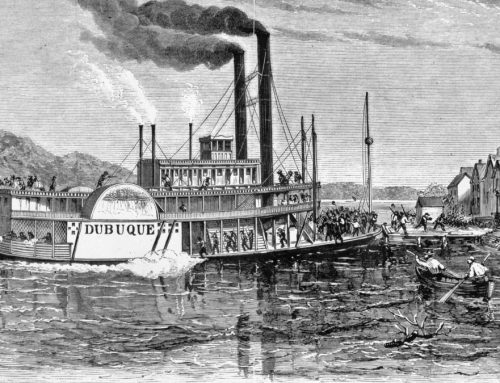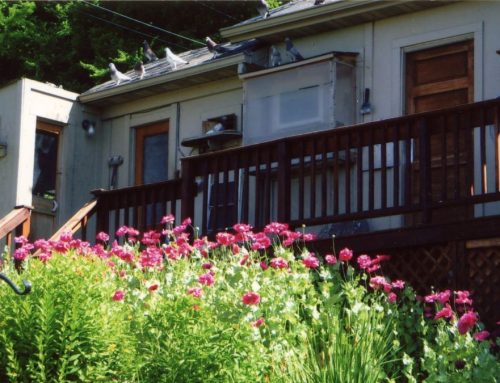
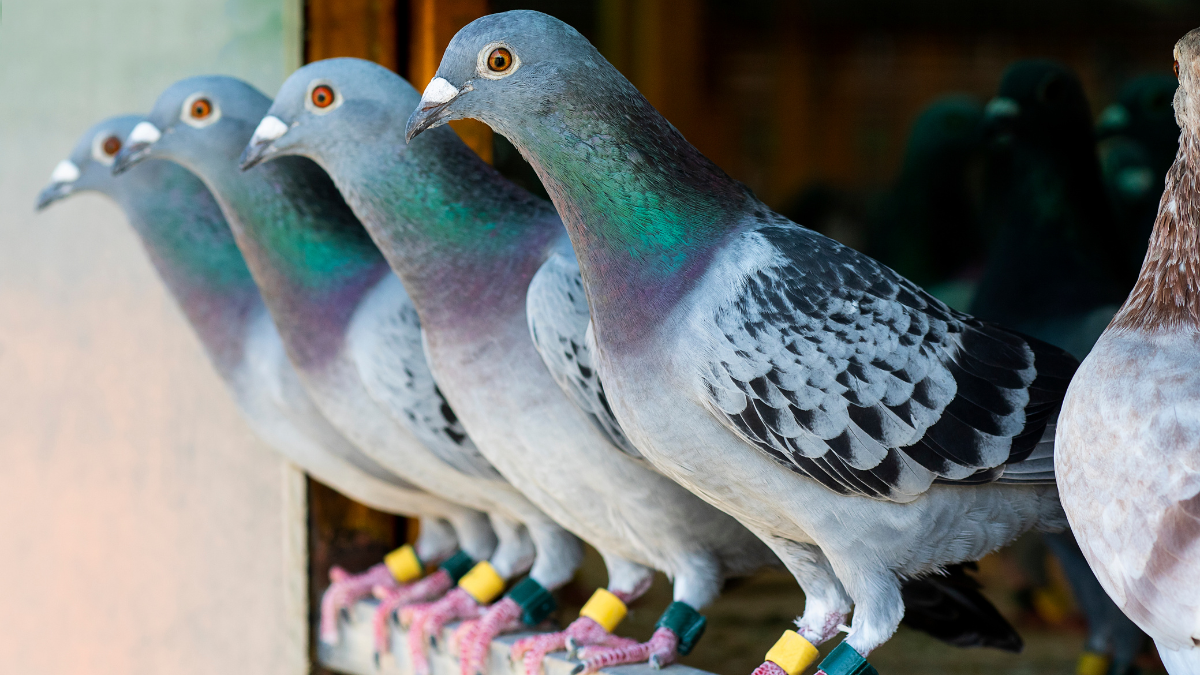
Actually, let’s rephrase that. Who does love pigeons? The average opinion seems to waver somewhere between “public nuisance” and “spreader of disease and discord” and “rats with wings.” But despite all the bad press, pigeons have a long history of living among humans and on occasion, making our lives easier.
Air Mail Before It Was Cool
Homing pigeons, or homers, have been used as messengers in civilian and military roles since ancient Egyptian and Greek times. In the 20th century, homers were used by the Signal Corps in both World Wars. La Crosse’s own Jerome J. Pratt served as captain of a mobile pigeon unit and wrote a book about the experience. But in peacetime—and in eras with more reliable instantaneous means of communication—what use do we have for homing birds?
Getting Their Ducks—er, Pigeons—in a Row
Luckily, people can make a hobby—or a competition—or both, out of anything. Fanciers breed and show all varieties of pigeons, and they often race as well. The American Racing Pigeon Union (AU), active nationally from the 1870s, was officially founded in 1911. The AU has united local clubs under a national umbrella with regional zones, sold racing bands, assisted with federation, and created guidelines for conduct and racing rules. They also print educational materials and yearbooks.
So You Want to Race Pigeons….
So now that we’ve gotten all that structural history out of the way, imagine you’re a prospective pigeon racer. How do you get started? These days you might research birds online. Winonan Robert Keiper, who graciously agreed to be interviewed for this piece, remembers doing his first research at the Winona Public library. You’ll also need— naturally—a bird. Knowing someone who breeds and races pigeons may give you a leg up; a breeder might be willing to sell you a homer/racer squab, i.e. a young pigeon under 4 weeks old. Keiper also remembers a friend teaching him how to raid common pigeon squabs (not racers) from nests in the girders beneath an interstate highway bridge.
Once you’ve got your bird, you’ll need food and lodging. Pigeons are grain-and-grit eaters. If you’re strapped for cash, you can collect grain spillage from the tracks and use that for feed. Keiper recalls local pigeon breeder Al Lejk, also a Bay State Milling employee, selling bags of mixed grain and grit to pigeon enthusiasts. The bird will also need a cage in a loft to call home when training begins, which can be as early as a few days after weaning. Note: this article will not be a primer on how to train racing birds! Please reach out to your local helpful AU representative or pigeon racer with any specific questions.
Ready, Set… Coo!
A pigeon race usually consists of transporting birds to a release location, release, and timed return. In the past, some local clubs had railway contacts who were willing to put pigeons on the train and release them at distant stations. Other racers transport the birds to release locations themselves in trucks or trailers. Once released or liberated by independent handlers, depending on the race a bird can potentially fly up to 600 miles per day.
To track the birds (and mark their return times fairly) requires other necessary racing accessories. In the analog days, these consisted of a timing clock and a counter-marker banded to the bird that also helped with identification should the bird get lost or recovered. Nowadays this is done digitally, with electronic clocks, RFID chips, and a corresponding sensor in pigeon hutches to log the precise moment of their return.
No GPS? No Problem
Just how do pigeons find their way home? Bird owners, specialists, and wags have posited all sorts of explanations: magnetic fields, recognition and understanding of sunlight and visual markers, infrasound, smell. While ultimately the complete explanation is still unknown, it’s clear to pigeon
owners that training racers improves their accuracy and distance.
To Be Continued….
See next week’s post for how hairy (or feathery?) pigeon races can get, and a look at local competition and clubs!