Historical records have often emphasized people in positions of power while relegating the experiences of workers to the dark, dusty corners of memory. Among those often unrecorded stories are the early Black families who helped shape life along the Winona riverfront.
For The River Gallery exhibit project, the WCHS exhibits team partnered with Anders Genealogical Services to take a deeper look at the lives of Black Winonans who made Winona County their home. Their research offers a glimpse into the experiences of early Black residents and contributes to a more robust perspective on Winona’s past.
Jackson F. Houser (1832–1918) and Maria P. Houser (1831–1892)
We do not know exactly why Jackson and Maria Houser chose Winona as their home in the late 1860s. Jackson had previously worked as a laborer at a grain depot, and Winona’s growing riverfront economy may have offered similar opportunities. Whatever their reasons, the Housers moved from Jo Daviess County, Illinois, to the budding city of Winona between 1866 and 1870.
Murder on the Steamboat Dubuque
Their arrival came during a period of uncertainty and racial tension across the United States. Although the Civil War had ended and slavery had been abolished four years earlier, Black Americans continued to face discrimination, violence, and unequal treatment in both the South and the North.
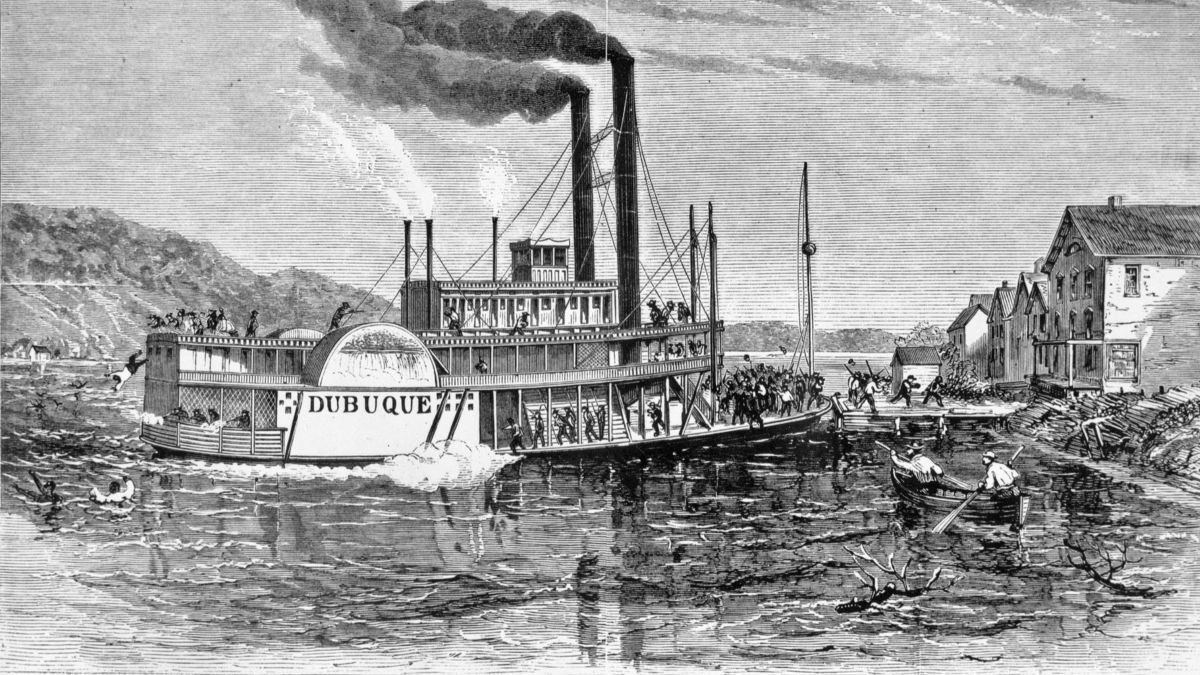
In 1869, around the time the Houser family arrived in Winona, the steamboat Dubuque docked at the city’s landing. It brought terrible news. A group of white raftsmen returning upriver to the northern pineries in Minnesota and Wisconsin forced 22 Black crew members from the vessel and violently attacked others who remained aboard. In total, the rioters killed six Black crewmen.
Navigating Post-Civil War Winona
Within this environment, Jackson Houser established himself in Winona and found work as a steamboat baggage master. While we cannot know how the family reacted to reports of the violence, it is difficult to imagine that the news did not resonate with J ackson and Maria as they raised six children – Clarkson, Joseph, Charles, Lavinia, Isabella, and Maria – just upriver from the site of the tragedy in Iowa. For Black families building new lives in communities across the country, questions about safety, opportunity, and belonging remained very real.
Despite the challenges of the era, Jackson and Maria built a life for their family in Winona. Census records indicate that Jackson could read and write, and he owned property in the city. In 1890, he opened his own business, The Red Front Fish Market, located on Fourth Street. He was still operating the market after Maria’s death in 1892.
The Housers’ Legacy
The Houser family’s story did not end there. Among Jackson and Maria’s children and grandchildren were a professor and graduate of Winona Normal School, a newspaper editor, a college graduate and hotel owner, and others who contributed to their communities through skilled trades and civic involvement.
Stories like the Housers’ remind us that community history is shaped not only by the rich and prominent, but also by the families whose daily lives helped build and sustain a city. By uncovering and sharing these stories, we gain a richer understanding of Winona.
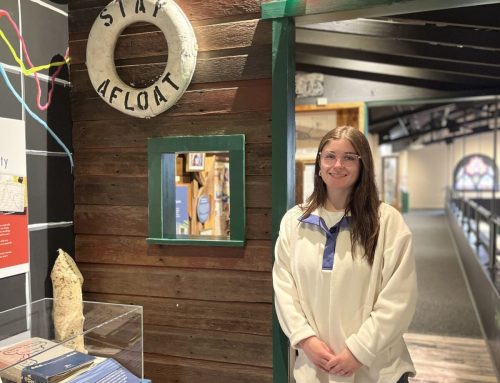
Visitors can learn more about the Dubuque riot and members of the Houser family in The River Gallery at the Winona County History Center. As work continues on exhibits scheduled for completion in 2027, additional stories from Winona County’s past will help broaden our understanding of the people and experiences that shaped the community.
Images for this article are courtesy of: University of Wisconsin-La Crosse, Murphy Library, Special Collections and Minnesota Digital Newspaper Hub.